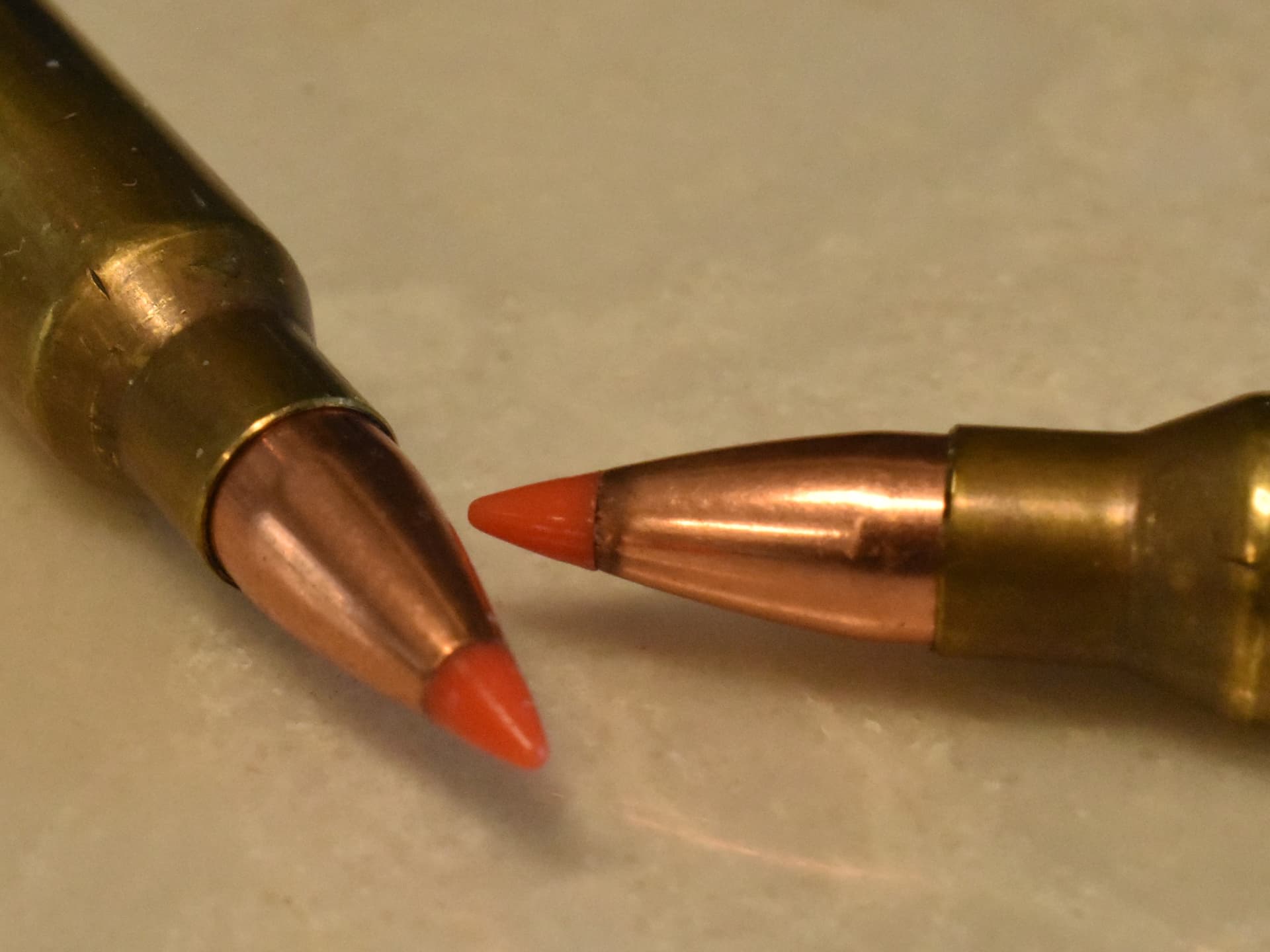
In my most recent reloading session of 223 I was trying out a new bullet, Hornady 60gr V-Max. For whatever reason had some trouble dialing in the seating, but I got it done. However, I was left with 7 fully processed cases with bullets that needed to be pulled.
Out comes the Lyman inertia puller. have used it in the past on 223, 308, 30-06 and 7mm RM with no problems other than the “nut” coming loose a few times. Just a few good whacks and boop, bullet unseated. Pulling this latest batch of 223 was not like that at all.
I had to really wail on that hammer to dislodge the bullet, I mean REALLY go at it. To the point I was certain the Lyman was going to break. I know the inertia puller isn’t the easiest way to pull bullets, but it works good 'nuf for my volume of reloading, usually.
The cases (LC NATO), and necks, were properly sized using RCBS dies, trimmed to spec +/- .002, and the necks were cleaned using a bronze brush on a drill, the mouths chamfered and deburred. Precise, and a little fastidious (another word for the “retentive” type). By all conventional means, a well done prep.
So why in the heck do I need whack the inertia puller like the hammer of Thor to dislodge these particular bullets?
Now I am a little concerned there is too much neck tension and unsure I should shoot the lot of 20 for fear of over-pressure.
I wouldn’t worry about the neck tension, that proj is coming out far before peak pressure. Even crimping doesn’t cause issues as long as the reloading guy isn’t being dumb
Is the bullet the only new thing? I’ll guess that your batch is a few 10-thousandths larger than previous, perhaps Hornady’s dies are wearing down and not final sizing them as small. If you have other bullets you can seat them in the same cases to test
Once fired brass? If it’s been a few times the neck might be worked to full hardness and needs to be annealed. If you have fresh cases try the same bullets and see if there still sticky
Using RCBS dies, and no way they are worn out. I’ve resized maybe 1000 pcs of brass on the die set.
No, not your dies. The dies at the factory that made the bullets might be wearing out. As they wear that final sizing die gets larger and the bullet comes out bigger. Do you have a micrometer?
Sounds like in playing with the seating depth, you also changed the level of crimp. One of the problems with using the seating die to seat AND crimp.
I use the seating die to only seat to the proper length.
For rounds I want to crimp (non-match Zombie rounds) I use the Lee Factory Crimp die to apply the desired crimp.
My crimped rounds will stand up to the roughest handling.
My match rounds are meant to be handled gingerly. After all, their purpose is to find the X-ring as long as I do my part.
Yes, it’s one more step, but that’s the price of being a quality reloader.
As to bullet pulling, ditch the inertia hammer and get a press-based (like the RCBS I use) puller with the appropriate collet(s).
Not frequently needed, but much much easier than the hammer.
Remember the old adage:
Buy Once, Cry Once.
Quality tools last a very long time.
Not referring to the FL Sizing die, but to the seating die.
There are 2 adjustments on the seating die:
First is the die to press, which sets the crimp.
Second is the depth knob up top which only addresses the seating depth and overall length.
Try backing the seating die out a bit to apply no crimp, then the adjust the knob to set the proper length.
Then the Factory crimp die to set the desired uniform crimp you want.
Pulling a bullet from a crimped round with the hammer can be very frustrating, thus the separate puller die.
Has worked for me for the past 15 years.
As can be seen in the photo, there is no crimp, at all. The case mouths were chamfered to facilitate seating a flat base, and also deburred slightly on the outside.
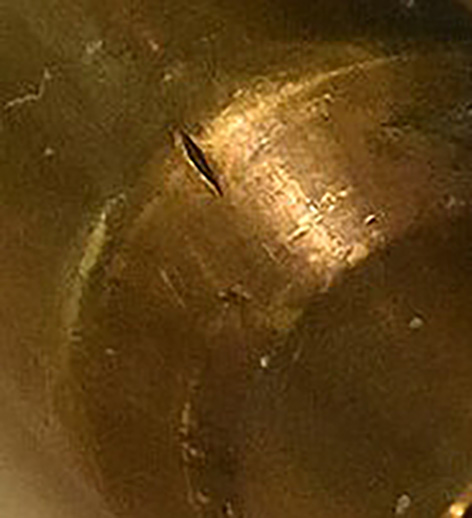
Pull those bullets out of the two cases in the photo! Then carefully check every round you reloaded this time! The brass is cracked in the same spot on both of your rounds! They are NOT safe to fire!
My best guess is the brass was used a number of times and the brass got hard and is cracking in the resizing stage.
I just checked with a loupe to inspect them again. Indeed there are marks on some of the brass. However, do not beleve they are cracks, they do not go all the way through. eg, the brass is not torn, it is nicked.
Interestingly, only very few of the PPU brass has the mark, but most of the NATO brass has a tiny nick in almost exactly the same place. If brass cracks, it won’t do it the same place every round. But now I am wondering where the tool marks are coming from.
I may have figured out the neck tension situation. The only thing I did different with these cases is brushed the inside of the case necks with a brass brush chucked to a drill. Doing this cut striations into the brass around the circumference creating a sort of grip.
Regardless of the is it a tool mark or crack in the case neckshoulder theory, I will be pulling all the reloads because of over pressure concerns.